The 2-Minute Version
- A physician tax return could cost anywhere from $0 to $8,500 to file, depending on who files it and the complexity.
- CPA fees jumped 46% in two years and the supply of CPAs keeps shrinking.
- IRS return data analyzed by the GAO shows paid preparers make errors on more returns (60%) than self-filers do (50%).
- For pure data entry, software is often better value but a physician-savvy CPA can help tremendously with judgment calls (entities, depreciation, multi-state).
- If you decide to use a CPA, start looking in October, not March.
The Dollar Math A typical physician return that costs $900 or more at a CPA files for $0 to $215 in software. With that said, when your return genuinely needs judgment, one planning engagement can pay for itself in found deductions.
Tax preparation is a topic most people want to stay far away from. It's complicated, time consuming, and monetarily painful. Unfortunately it must be done every year and we often get the question of: “Should I file with software or find a CPA?”
We encourage every physician to analyze their current situation in order to decide on software vs CPA for tax prep as there are pros and cons to both.
The Setup
The average professional fee for a Form 1040 hit $236, up 45.7% in two years. Driving that surge is a supply problem: CPA exam candidates are down more than 40% in a decade, the AICPA has estimated that roughly 75% of licensed CPAs are within 15 years of retirement, and the talent that remains keeps migrating to business-side work where larger check sizes live. The USA split its 141 million e-filed returns almost evenly last season: 53% through a paid preparer, 47% self-prepared.
Physicians sit on the expensive side of both softwares and CPA providers because of higher complexity that a typical physician tax returns come with. 38% of physicians carry side-gig income (consulting, expert witness work, moonlighting), which increases the tax return cost significantly. Here's a breakdown of what things add cost to the filing:
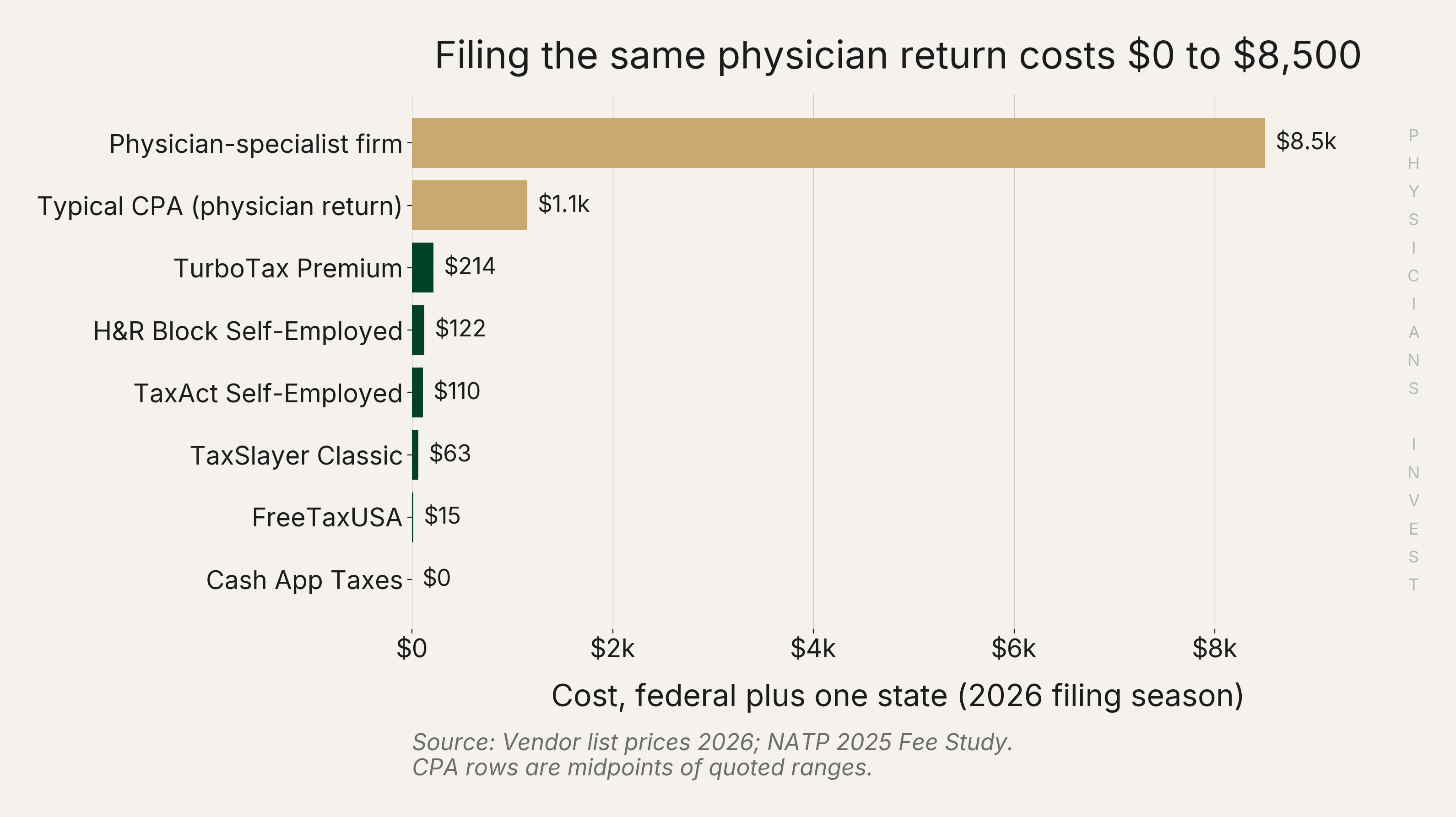 Source: Vendor list prices 2026; NATP 2025 Fee Study
The Case For Filing It Yourself
1. Software is more affordable. Software costs $0 to $215 all-in and files the identical forms that a CPA would.
2. Software is less prone to missing something. Many are afraid to use software because they fear they won't be as accurate. Interestingly, the accuracy argument for professionals collapses under the IRS's own data:
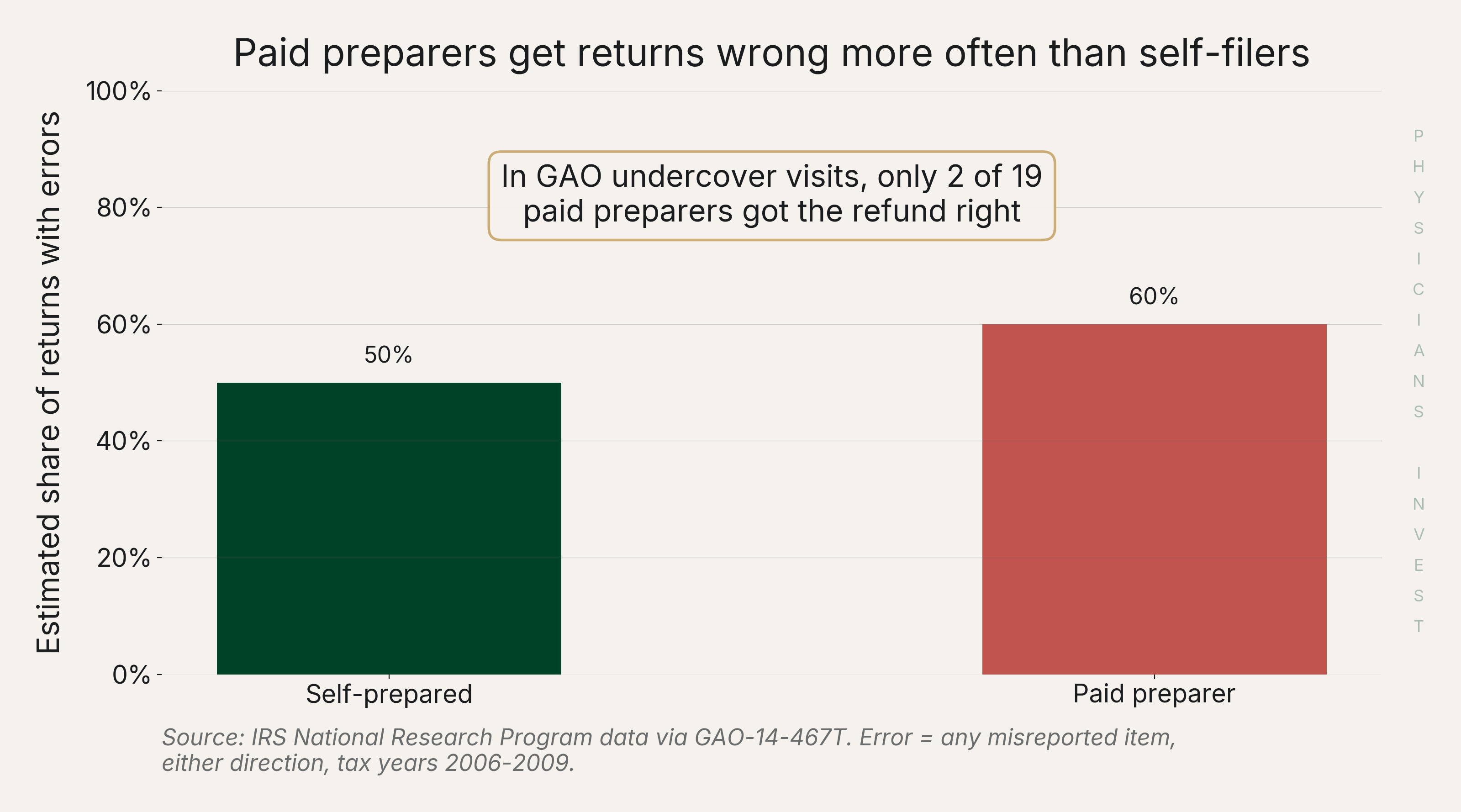 Source: IRS National Research Program data via GAO
That 60% covers all paid preparers, a mix of CPAs, Enrolled Agents, and untested franchise preparers, not CPAs alone.
3. AI can help to supplement where expertise is needed. Our advice for most physicians is to use software and the assistance of AI tools for learning as you go. The AI should be considered a learning tool and not as a preparer. It can be a great copilot that can view form screenshots and also provide clarity to decisions. As an aside, we'd also focus on reading small-business tax books (Kohler's The Tax and Legal Playbook is our pick) to help build knowledge and form strategy.
How to pick? Many softwares exist out there for tax prep and all ultimately accomplish the same goal. Our recommendation is Turbotax for more complex returns and FreeTaxUSA for more simple returns.
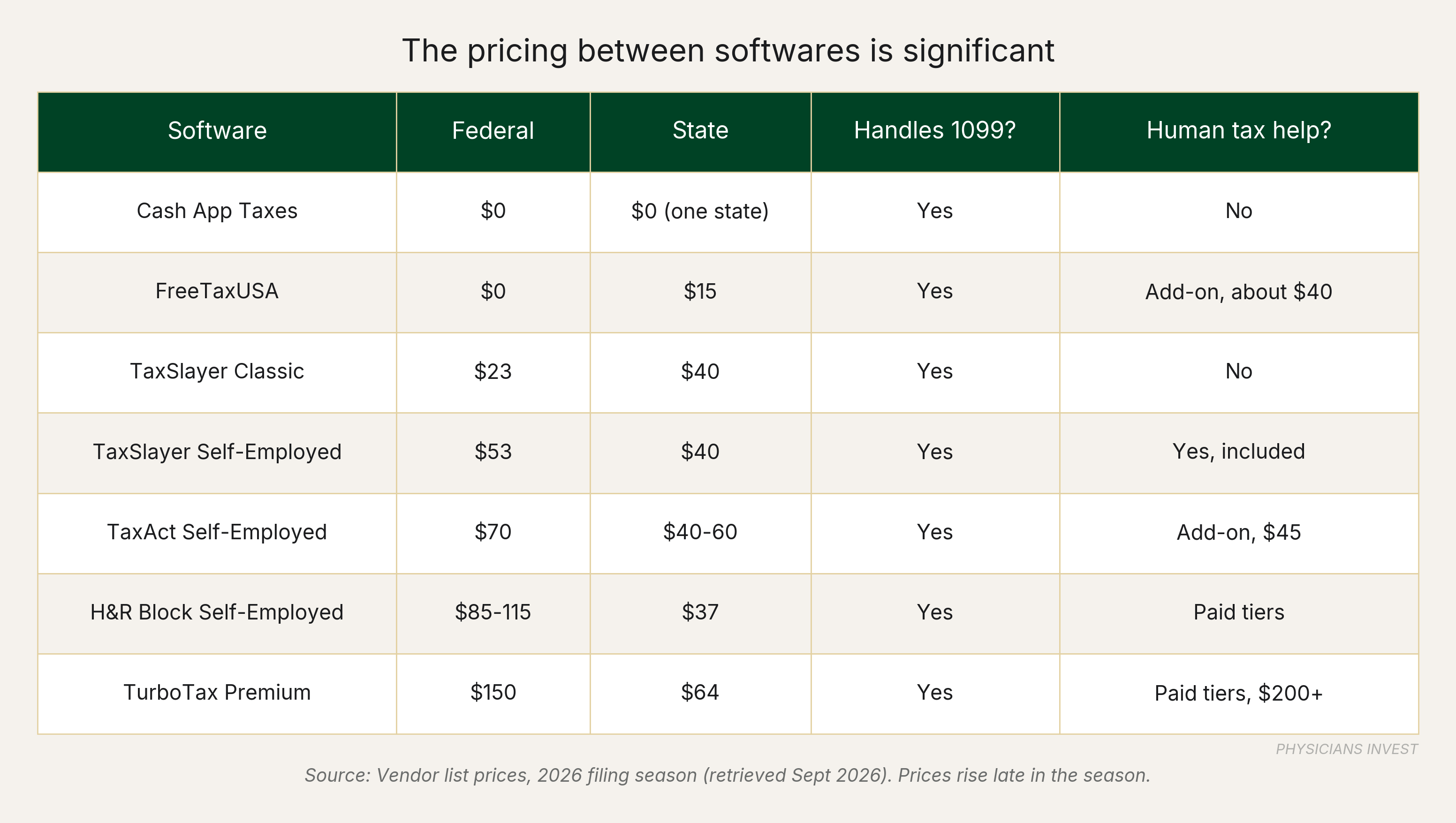 Source: Vendor list prices, 2026 filing season
The Case For Hiring a Pro
1. Time saved. The strongest argument for hiring a professional is the outsourcing of all the time consuming tasks associated with filing. For a straightforward return, plan for 8 dedicated hours, and plan for 21 dedicated hours if you have small business income/expenses. These are full and miserable spreadsheet hours that a professional could save you.
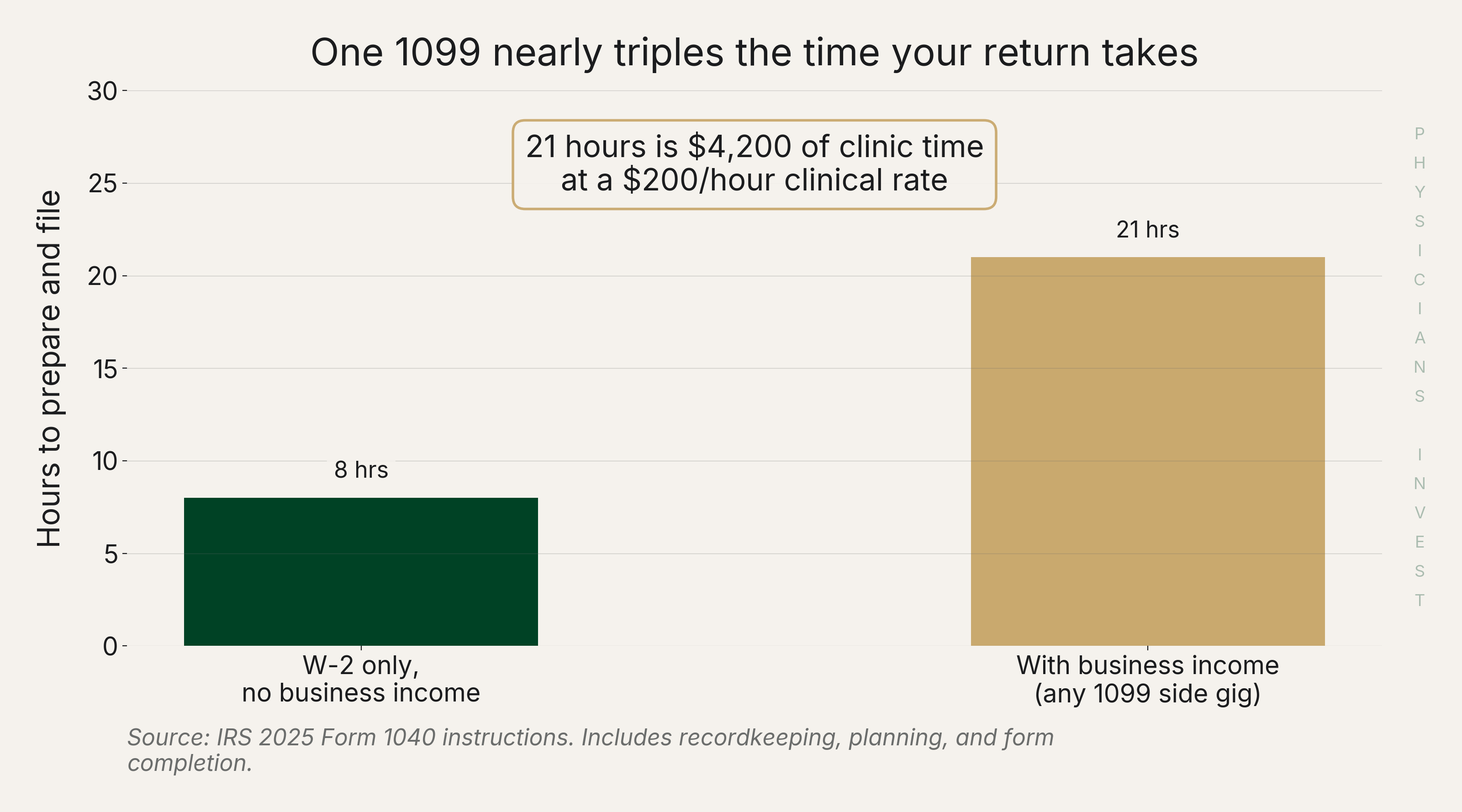 Source: IRS 2025 Form 1040 instructions
2. Expert knowledge. A good CPA also earns the fee early by explaining the lay of the land in an easy to understand way such as: how oil and gas flows through a return, how rental real estate works, what a depreciation schedule (the multi-year write-off calendar for big assets) demands of you.
3. Audit representation. The third way a CPA adds value is through removing the fear of navigating an audit: roughly 3 in 4 audits are letters requesting documents, and having someone whose job is answering that letter is worth the peace of mind to many people.
The downside to using a CPA is the bill:
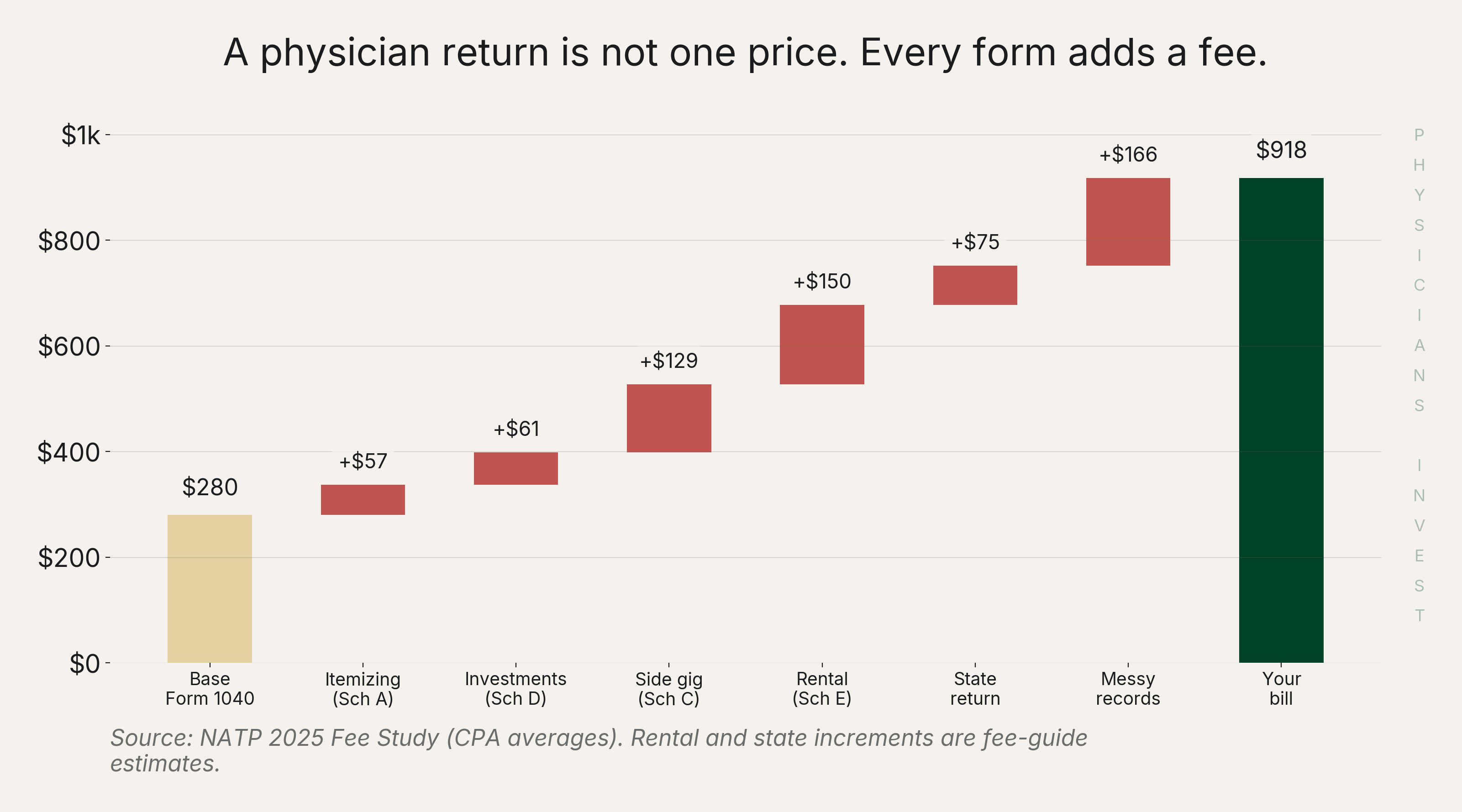 Source: NATP 2025 Fee Study
A typical physician return lands at $800 to $1,500 in a metro market. If that fee buys planning (entity structure, retirement plan design, timing), it's cheap. But if it buys simple data entry alone, it's software at 10x the price. Keep in mind that CPA quality varies wildly: plenty of CPAs are dead in the water past a classic W-2 1040. We know from personal experience. The CPA exams are focused very little on retail tax and therefore you want someone with extensive personal tax return experience and not just the letters C, P, and A.
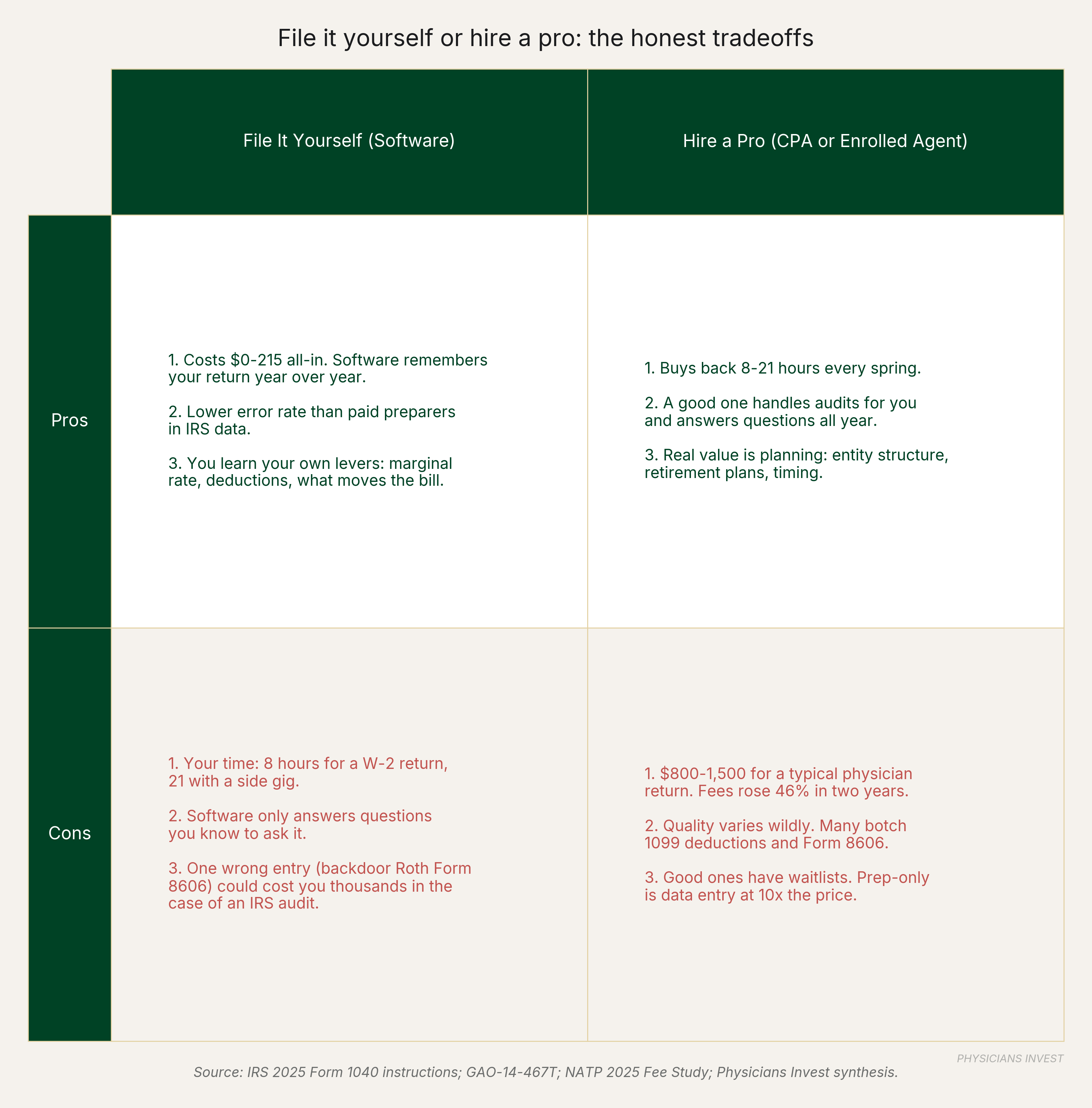
Here are the pros and cons side by side:
How to Decide
Think of it as triage. First, sort your return by what it contains, not by how you feel about spreadsheets:
| Your situation | Verdict |
|---|---|
| W-2 only, standard deduction | Software. Any of them. |
| W-2 plus backdoor Roth | Software, but verify Form 8606 yourself. |
| W-2 plus a 1099 side gig under ~$25k | Software (self-employed tier) |
| S-corp, practice ownership, K-1s, or multi-state locums | Physician-savvy CPA. |
| Big transition year (new attending, new entity, practice sale) | One-time planning engagement, then reassess. |
Backdoor Roth: a two-step move that lets high earners fund a Roth IRA despite the income limit.
Try the software path first with an AI model as a copilot. If it still feels above your head or too complex, escalate to CPA. Two logistics notes:
- Hire in the window. Good CPAs are buried in extended returns through October and heads-down by January. October through November is when they take new clients. Start searching in March and you often get the leftovers.
- Vet with specifics. Ask: Are you a CPA or Enrolled Agent? How many physician clients? Walk me through reporting a backdoor Roth (if they hesitate on Form 8606, walk). Who prepares my return and who reviews it? Is audit representation included?
Sources
Data
- IRS Filing Season Statistics, week ending May 8, 2026
- NATP 2025 Fee Study via Accounting Today
- NATP 2026 fee outlook via CPA Trendlines
- IRS 2025 Form 1040 instructions: Estimated Average Taxpayer Burden
- IRS Data Book: compliance presence
- Vendor pricing: The College Investor comparison
- Medscape Physician Compensation Report 2025
Analysis
- GAO-14-467T: Paid preparers made significant errors
- NASBA 2024 Candidate Performance Book
- CPA Journal: the leaking accounting pipeline
Related from Physicians Invest